Health and Safety Policy for a Removal Company in Lambeth
 This health and safety policy sets out the standards expected from a removal company in Lambeth to protect staff, clients, visitors, and the public. Safe working is central to every moving service, from household relocations to office removals, storage handling, and loading operations. The aim is to reduce risk, prevent injury, and promote a responsible culture where hazards are identified early and managed effectively. Our approach combines planning, supervision, training, and continuous review so that every move is carried out with care and consistency.
We recognise that removal work involves heavy lifting, moving furniture through tight spaces, handling fragile goods, and working around vehicles and lifting equipment. Because of this, our removal company safety policy is built on practical controls rather than paperwork alone. We expect every team member to follow safe systems of work, use suitable equipment, and report concerns promptly. This policy applies to all operations, whether the job is routine, complex, residential, or commercial.
The company is committed to meeting its duties under relevant health and safety law, while also maintaining a proactive standard that goes beyond minimum compliance. We will regularly review our procedures, assess task-specific risks, and make improvements where needed. Safety is not optional; it is an essential part of the service we provide.
Core Responsibilities
Management is responsible for ensuring that health and safety arrangements are properly implemented. This includes providing suitable equipment, organising safe work schedules, maintaining vehicles, and making sure employees receive the information they need to work safely. Supervisors must carry out checks before and during each assignment, especially where the environment is unfamiliar or access is restricted. A removal firm in Lambeth must plan each move with care, anticipating hazards such as stairs, narrow hallways, poor lighting, traffic movement, and unstable loads.
Employees are expected to take reasonable care of themselves and others. They must use equipment correctly, wear any required personal protective equipment, and never attempt tasks beyond their training or physical capability. Team members should remain alert to changing conditions, including weather, access issues, broken surfaces, and customer-supplied items that may be damaged or unsafe to move. Good communication is essential, especially during lifting, carrying, and loading.
Clients and other third parties also have a role in safe working. Where required, we may ask that access routes are kept clear, pets are secured, and delicate or hazardous items are identified in advance.  Clear cooperation helps a house removal company complete work safely and efficiently.
Risk Assessment and Safe Working
Before any move begins, a risk assessment should be completed and reviewed by the relevant supervisor. This assessment considers the property layout, weight and size of items, vehicle access, parking arrangements, weather, time pressure, and any special handling needs. Risks are then controlled through planning, route selection, team size, and equipment choice. Where necessary, manual handling limits are applied to prevent strain or injury.
Manual handling remains one of the most significant risks in removals. Staff must use correct lifting techniques, work in pairs when appropriate, and rely on mechanical aids for heavy or awkward items. Items should be assessed before lifting, with attention to weight distribution, grip, sharp edges, and balance. Repetitive strain and sudden twisting movements must be avoided. If an object appears unsafe, the task should be stopped until a safer method is found.
Our moving company health and safety policy also covers protective clothing, vehicle loading, and the securing of goods during transit.  Loading must be arranged to reduce shifting, collapse, or damage in transit. Load restraints, blankets, trolleys, ramps, and straps should be inspected before use and kept in good condition. Drivers must ensure loads are stable, legal, and compatible with the vehicle being used.
Training, Equipment, and Incident Reporting
Training is essential to safe performance. All new staff receive induction covering hazard awareness, manual handling, customer property care, emergency procedures, and correct equipment use. Refresher training is provided when methods change or when performance issues show that extra support is needed. Supervisors should monitor working practices and correct unsafe behaviour immediately. A removal services safety policy is only effective when workers understand it and apply it consistently.
Equipment must be suitable for purpose, maintained, and checked before use. This includes lifting straps, dollies, sack trucks, ramps, blankets, gloves, and other handling aids. Damaged equipment must be removed from service at once. Vehicle checks should include tyres, lights, brakes, fuel levels, loading space, and securing devices. If a fault is found, the vehicle or equipment should not be used until it has been made safe.
All accidents, near misses, injuries, property damage, and unsafe conditions must be reported promptly. 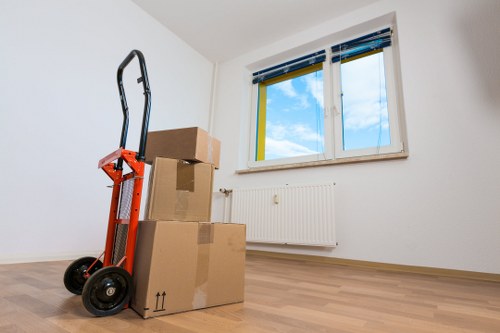 Reporting helps us learn from incidents and reduce the chance of recurrence. Where appropriate, an investigation will be carried out to identify root causes and corrective actions. Records are kept to support review, trend analysis, and continuous improvement.
Emergency Preparedness and Wellbeing
Emergency procedures must be understood by all employees. If an accident, fire, vehicle incident, spill, or medical emergency occurs, staff should stop work, make the area safe where possible, and seek help immediately. First aid arrangements should be available on jobs where required, and supervisors must know how to respond in a calm and organised manner. Emergency planning is especially important in unfamiliar buildings, storage sites, and locations with restricted access.
We also recognise the importance of mental and physical wellbeing. Removal work can be demanding, time-sensitive, and repetitive, so workloads should be planned realistically. Breaks should be taken where possible, fatigue must be monitored, and employees should not be pressured to work unsafely. A removal company policy that values wellbeing supports better decisions, lower accident rates, and improved service quality.
Supervisors are responsible for ensuring that fatigue, stress, and unsafe shortcuts are addressed early.  The company encourages open reporting and a respectful culture in which safety concerns are acted upon without delay.
Review and Continuous Improvement
This policy will be reviewed regularly to ensure it remains effective, practical, and aligned with current working practices. Changes to vehicles, equipment, staffing, job types, or legal requirements may trigger an earlier review. Feedback from internal audits, incident reports, and operational checks will be used to improve procedures over time. The aim is to maintain a safe removal service that protects people and property on every assignment.
By following this policy, the company aims to provide a reliable, professional, and safety-conscious service. Everyone involved in the work shares responsibility for maintaining high standards, preventing avoidable harm, and ensuring that each move is completed with care, attention, and respect for the people involved.